
• Home

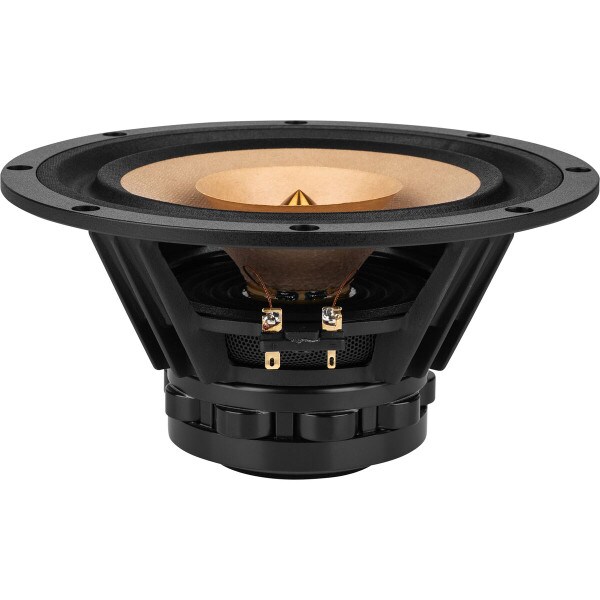
Tang Band W8-1772 8" Neodymium Full Range Driver
Tang Band
Part #264-893

Tang Band W8-1772 8" Neodymium Full Range Driver
Tang Band
Part #264-893  
Model: W8-1772
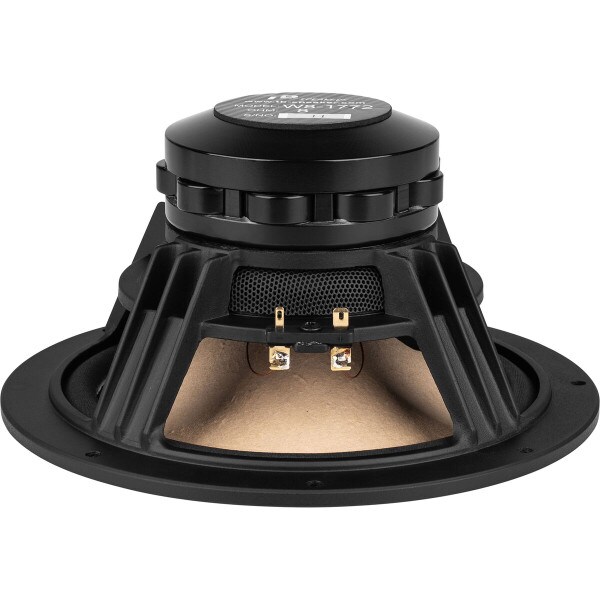
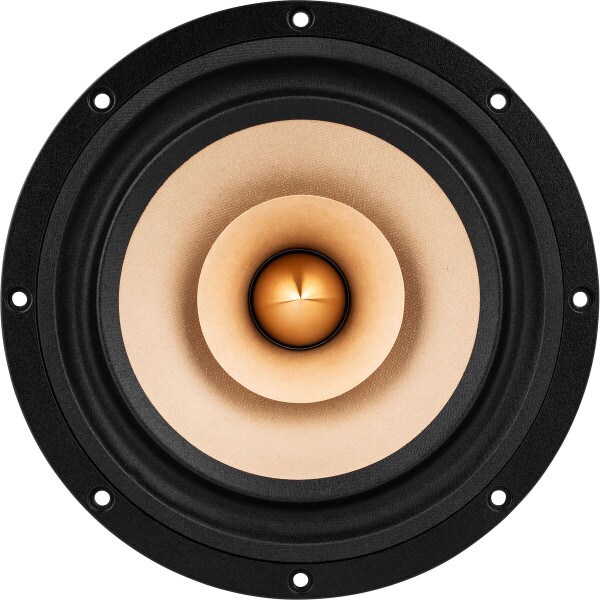
Tang Band's W8-1772 full range driver features a sturdy cast frame, multiple-element neodymium magnet system, paper cone, and cloth half-roll surround.
Key Features
  • Powerful neodymium motor allows high efficiency from an underhung design
  • Highly damped paper cone and whizzer cone provides natural response
  • True full range response with the low frequency capability of an 8" driver
  • 95 dB efficiency is perfect for class A and tube amplifiers
Your Price: $349.98
+ FREE SHIPPING
MSRP: $454.99
Save $105.01 (23%)
Bulk Pricing
Quantity: Qty: 1-3 $349.98/ea
Quantity: Qty: 4-9 $332.48/ea
Quantity: Qty: 10+$314.98/ea
Ships next business day. Details

In Stock

Free Shipping available on orders over $99.00 in the US. Details

Overview

Tang Band W8-1772 8" Neodymium Full Range Driver

Tang Band's W8-1772 full range driver features a sturdy cast frame, multiple-element neodymium magnet system, paper cone, and cloth half-roll surround. A precisely machined integral plug prevents phase cancellations and improves high frequency extension and dispersion. The underhung 1-1/2" voice coil reduces second and third harmonic distortion while still delivering high efficiency (95 dB 1W/1m ) and 3 mm of Xmax. Designed for point source/full range applications.

Product Details

BrandTang Band
ModelW8-1772
Part Number264-893
UPC844632079030
Unit of MeasureEach
Weight6.95

Product Specifications

Nominal Diameter8"
Bolt Circle Diameter8.3
Moving Mass Of Diaphragm (Mmd)10.11
Power Handling (RMS)30 Watts
Power Handling (MAX)60 Watts
Impedance
Frequency Response42 to 20,000Hz
Sensitivity95dB 2.83V/1m
Voice Coil Diameter1.5"

Thiele-Small Parameters

Resonant Frequency (Fs)42Hz
DC Resistance (Re)6.8Ω
Voice Coil Inductance (Le)0.009mH
Mechanical Q (Qms)1.02
Electromagnetic Q (Qes)0.36
Total Q (Qts)0.27
Compliance Equivalent Volume (Vas)3.34ft³
Mechanical Compliance of Suspension (Cms)1.37mm/N
BL Product (BL)7.12T·m
Maximum Linear Excursion (Xmax)3mm
Surface Area of Cone (Sd)9cm²

Materials of Construction

Cone MaterialPaper
Surround MaterialCloth
Magnet MaterialNeodymium

Mounting Information

Overall Outside Diameter8.81"
Baffle Cutout Diameter7.48"
Depth4.37"
# Mounting Holes8

Optimum Cabinet Size (determined using BassBox 6 Pro High Fidelity suggestion)

Sealed Volume0.34ft³
Sealed F3133Hz
Vented Volume0.78ft³
Vented F385Hz

Specifications

Q&A

Have a question? Ask owners. Have a question about this? Ask people who own it.
Start typing and see existing answers.
35 Questions
Why did you choose this?

Among full range drivers, for its price is a bargain

Higher sensitivity.

need to build fullrage speakers for my single ended 8w tube amplifier

I bought this based on the reviews, because I want to compare the same driver in an omnidirectional speaker vs. a traditional sealed enclosure vs. a vented enclosure. Using a full-range driver…

Ideal cabinet vol. and port dimensions? Thanks

Best Answer: The recommended cabinet volume for this driver is 0.84 cubic feet before displacement with a 2.5" diameter, 3" long port. This will tune the cabinet to 56 Hz.

I have Dallas RLH cabinets and want to swap 206En's for either W8-1772 or W8-1808. Which should I choose?

...and why would one be a better choice than the other? Thanks.

Best Answer: Great question... These two drivers appear, from the specs and pictures, to be only slightly different versions of the same full-range design. I don't think they would perform very differently from each other in any cabinet.
It looks like the difference in the two speakers is related to extended X-max on the 1808. In extending the X-max, mechanical changes (weghtier parts due to added length or stiffness?) would logically result in the 2 db lower efficiency for the1808.
What usually follows is that the speaker with the most X-max would have the most low-bass extension, but these two speakers have almost exactly the same Fs and frequency response, so I'm not sure you would hear the 1808 as being more robust in the lowest bass.
I would tend to order the 1772 for any cabinet. It will be louder, and since there is the same 30w RMS rating on each speaker, you will get more level from the 1772 at all frequencies.
If you are considering these speakers, with their very modest power capabilities, I suspect you are not trying to "rock the house" with dance bass. The 1772, which is probably controlling less mass with the same magnet, will probably give you a slightly more accurate, sweeter full-range response.

Would using 2 of any of the drivers below per channel work well (driver port driver) configuration or should only 1 per channel. I have a large listening area and wondered if 2 drivers per channel would help fill the space with sound better?

Best Answer: If wired in parallel to a 4 ohm load you will get a 6 dB total boost to sensitivity for a louder sound. You get a 3 dB boost every time you double the cone area, and a 3 dB boost if you wire them in parallel to a lower impedance. That is assuming the amp used can handle a 4 ohm load.

Greg
Thanks for your quick response. I did not word my question very well. I am more concerned about the 2 drivers per channel being “point source” effecting the sound. Essentially I would have two tweeters in different locations on the baffle.

Thanks Dan

If you are using them as full range then you could have issues in the upper frequencies. It could result in issues if they are too far apart. Your best bet is to group them close together and put the port someplace other than between them to avoid any issues.

I have have some good experience with single point drivers. I am considering a project for the 1772, I have (2) Dayton RSS265HF-4 10" subs, I like it loud and use a low power tube amp. Would I be going down the wrong road to use two of these per channel, 1 a foot below and 1 a foot above & angled to my listening height to further increase efficiency and DBs?

Best Answer: The wording of your question requires me to make some assumptions. You don't have complete subs, self powered and in their own cabinet it appears. So, I would give you a BIG NO to what you are contemplating!! Or better yet, a big NO WAY! Won't work! Those subs are 87db sensitivity. If you don't know what this means, then you aren't ready to be thinking of set ups like this. It means they won't play very loud, sub or otherwise, from a low powered tube amp. Here is my advice.. put the Tangs in their own enclosure optimized FOR THEM. Get you 1 (or 2) GOOD subwoofers in their own enclosures and self powered. Then, split the outputs (Y them) from your preamp or amp (preferably preamp). Use your tube amp to drive the Tangs, and the amps built into the subs to drive them. Then, adjust the volume on the rear of the subs to match the volume of the Tangs to your liking. Will be nice if the volume on the subs is remote controlled. And it doesn't matter how close a subwoofer is to the Tangs because the bass is so non-directional! The sub will be handling about 80Hz and below roughly and don't need to be close to the Tangs.

Thanks Stephen. I should have explained that the subs are complete and pretty happy with the performance. Each are powered with a 250w Dayton amp, I use speaker in, then speaker out to my current full range drivers (high pass filter). My question was more of a TB question about using two per channel and if I need to be concerned about phase canceling that could impact performance of using two drivers per channel. Now that I'm thinking about it, I guess I could buy two drivers, design a cabinet that would allow me to stack them for one channel as a experiment and testing.

I should have been more descriptive, the subs are finished with Dayton SPA200 amps, I use the speaker level in from the tube amp and speaker out to my full range speakers (using the high pass filter in the sub amp). I was more focused on impact of using (2) 1772 per channel and if the two would cancel each other or what distance apart the should be. Would this approach negatively effect the sound field? Etc?

could this driver be used in open baffle as opposed to it's higher Q counterpart to take addvantage of the higher efficiency

Best Answer: I would think it would be great for open baffle but as spunky said, in combination with other drivers. I'm thinking about trying them anyway, would probably want to crossover around 100 Hz, certainly not much lower into an open baffle woofer system. My plan would be to use miniDSP for the active crossover EQ.

I have a pair of Tang Band W8-1772 8" Neodymium Full Range Drivers and was thinking that these might work if turned sideways. Two questions: where would you place the speaker cut out? At the top? In the middle? And what size port would be appropriate ? Thank you.

Best Answer: I am building a cabinet close to that size with a 3 inch port turned to 80 hz. I would place the speaker at the top, you could put the 3 inch vent front or rear bottom, that speaker will sound good!

Do you have a cabinet plan for this speaker??

Best Answer: Yes I built a pair of Voigt Pipes using " Tech Ingredients " Design. Very happy with the price performance. Cost all in ex labour $ 1000

For a friend of mine, who is the owner of a local wine bar, I am designing a sound system for his bar on the cheap. I am some what of an audiophile and have built several of my own speakers in the distant past. I want this bar to sound amazing, so I'm considering eight individual, equidistant Tang Band W8-1772 8" speakers of a Sonotube or PVC tube cabinet design pointing downward from the tall ceiling. I have two questions. 1. Even after I implement all dampening strategies, are there any issues with a tube shape cabinet and a full range speaker. 2. With regard to the W8-1772 excursion limits at higher SPLs, what is a safe roll-off strategy, e.g. how low can the fb be for a higher level output? Is there a general rule? There is a large subwoofer plan in the future, but for now I would like to get as much low-end out of the 1772s as possible without risking of damage to them. Thank you in advance.

Best Answer: Brines Acoustics has a mltl plan for w8-1772 parts list with parts express items caps resist etc awesome sound plenty bass simple economical excellent results

What is the vent size for the0.78 ft.3 box? Thanks, Jess

Best Answer: I would recommend a 3" diameter, 5" long port for a tuning frequency of 57 Hz.

Starting up a single driver full range project and have narrowed down to three choices, TangBand 8" neo full range(W8-1772), 6" Morrel integra 624 or this 8" Dayton point source.What driver would in your opinion would be best suited for a cone shaped sealed encosure? I understand this seems like a loaded question just looking for some honest opinions. Thanks.

Best Answer: I am by no means a speaker expert. And I know nothing about the other drivers. I can comment on the Tang Band. I have built numerous tube amps, the most recent a single ended 45. If you don't know, these amps put out 1-2 watts of very sweet music. They need a very efficient speaker to say the least. These speakers, with this amp, sound better than any other speaker I have ever listened to in terms of staging, transparency and separation. Perhaps not the best for hard rock or rap, these excel for female vocal, jazz, acoustic, and orchestra. For once I no longer even look at speaker upgrades, I feel I could not hear (or appreciate) any better sound than these put out. Hope this helps, good luck picking a driver.

Reviews

15 Ratings
4.8 out of 5 stars
15 Ratings

Rated 5 stars by 80% of reviewers

Rated 4 stars by 20% of reviewers

Rated 3 stars by 0% of reviewers

Rated 2 stars by 0% of reviewers

Rated 1 star by 0% of reviewers

Manuals & Resources

80% OFF
Ground Power Distribution Block 500 MCM to 6 x 4 AWG
Ends in 00:00:00
California Prop 65

WARNING: Cancer and Reproductive Harm

www.P65Warnings.ca.gov